



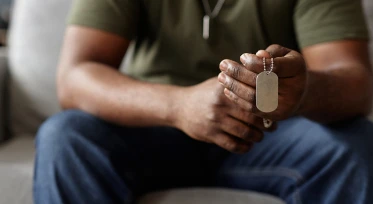


Access remains one of the most important challenges in Veteran healthcare. Veterans must be able to receive timely, high-quality care regardless of where they live, what services they need, or how complex their care journey may be.
But access is only the beginning.
The next chapter is about ensuring that access leads to a coordinated, efficient, and high-quality care experience. Is communication clear? Are providers supported? Does technology make care easier to deliver and navigate? Can the system consistently produce better outcomes?
For me, this mission is both professional and personal.
Through more than three decades of service, I have supported healthcare and government missions from multiple perspectives, as a retired Naval Officer, Chief Hospital Corpsman, Medical Service Corps Officer, federal executive, international development leader, and healthcare technology executive.
Those experiences have shaped one clear belief: the future of Veteran healthcare will not be defined by any single program, platform, or initiative. It will be defined by how well we connect people, processes, technology, and mission into a healthcare system that performs better for Veterans.
Access Opens the Door. Operations Shape the Experience.
A Veteran may have access to care and still encounter scheduling delays, fragmented communication, disconnected records, unclear next steps, or a care journey that feels difficult to navigate. A provider may be highly capable and still be slowed by administrative burden, inefficient workflows, or systems that do not work well together.
That is why modernization must be about more than adding capacity or deploying new tools. It must be about improving the full system of care.
In every healthcare environment I have served, military, federal, global, commercial, and mission-driven, I have seen the same truth: dedicated people are essential, but they cannot overcome broken systems alone.
For Veteran healthcare organizations, operational excellence is not a back-office function. It is a care delivery enabler.
The Capabilities That Must Work Together
The organizations best positioned to support the next chapter of Veteran healthcare will be those that can connect four critical capabilities into one operating model.
- Workforce readiness ensures care teams have the tools, training, leadership, processes, and support needed to deliver consistently high-quality care.
- Operational excellence improves scheduling, patient navigation, care coordination, reporting, compliance, and program execution.
- Technology modernization brings tools such as AI, automation, telehealth, data analytics, digital health, and interoperability into the care environment. But technology succeeds only when it simplifies workflows, improves visibility, supports better decisions, and helps patients and providers move through the system more effectively.
- Veteran experience keeps the patient journey at the center of every modernization effort. The goal is not simply to deploy more technology or launch more initiatives. The goal is to make healthcare work better.
Building Systems Worthy of the Mission
Across the Veteran healthcare ecosystem, leaders from government, healthcare providers, industry, academia, and the nonprofit community continue to explore real-world solutions, share best practices, and advance strategies that improve care delivery, patient outcomes, and system performance.
At Loyal Source, we are proud to support government healthcare missions through solutions that strengthen operations, enable innovation, and improve service delivery. For us, this work is about helping organizations design, build, and operate healthcare solutions that perform better for the people they are designed to serve.
As a Navy Veteran and healthcare executive, I believe deeply in this mission.
Veterans deserve more than access to care. They deserve healthcare systems that are modern, coordinated, efficient, compassionate, and built to deliver excellence at every stage of the journey.
That is the next chapter in Veteran healthcare delivery, and it is a mission worth advancing together.